Saturday, April 20, 2013

Happiness - The World According to Theodor Seuss Giesel Part III


HAPPINESS
The World According to Theodor Seuss Geisel Part III


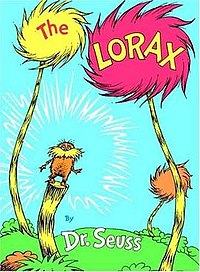
Once again, Dr. Seuss provides us with Life Lessons in his book, The Lorax. Whenever, I think I may need more, I have to stop to think about this truly inspiration book.  Do I really need more or is it just that I WANT MORE? Is this really going to bring me happiness?  Isn't this desire for more and more and more exactly what has brought us to where we are today - a narcissistic society?  We are lucky to have a new generation before us to train up in a way that will lead them to service and concern for all.  Or as Dr. Seuss writes:

          "The Lorax: Which way does a tree fall?
            The Once-ler: Uh, down?
            The Lorax: A tree falls the way it leans. 

                                 Be careful which way you lean.” 
~K~
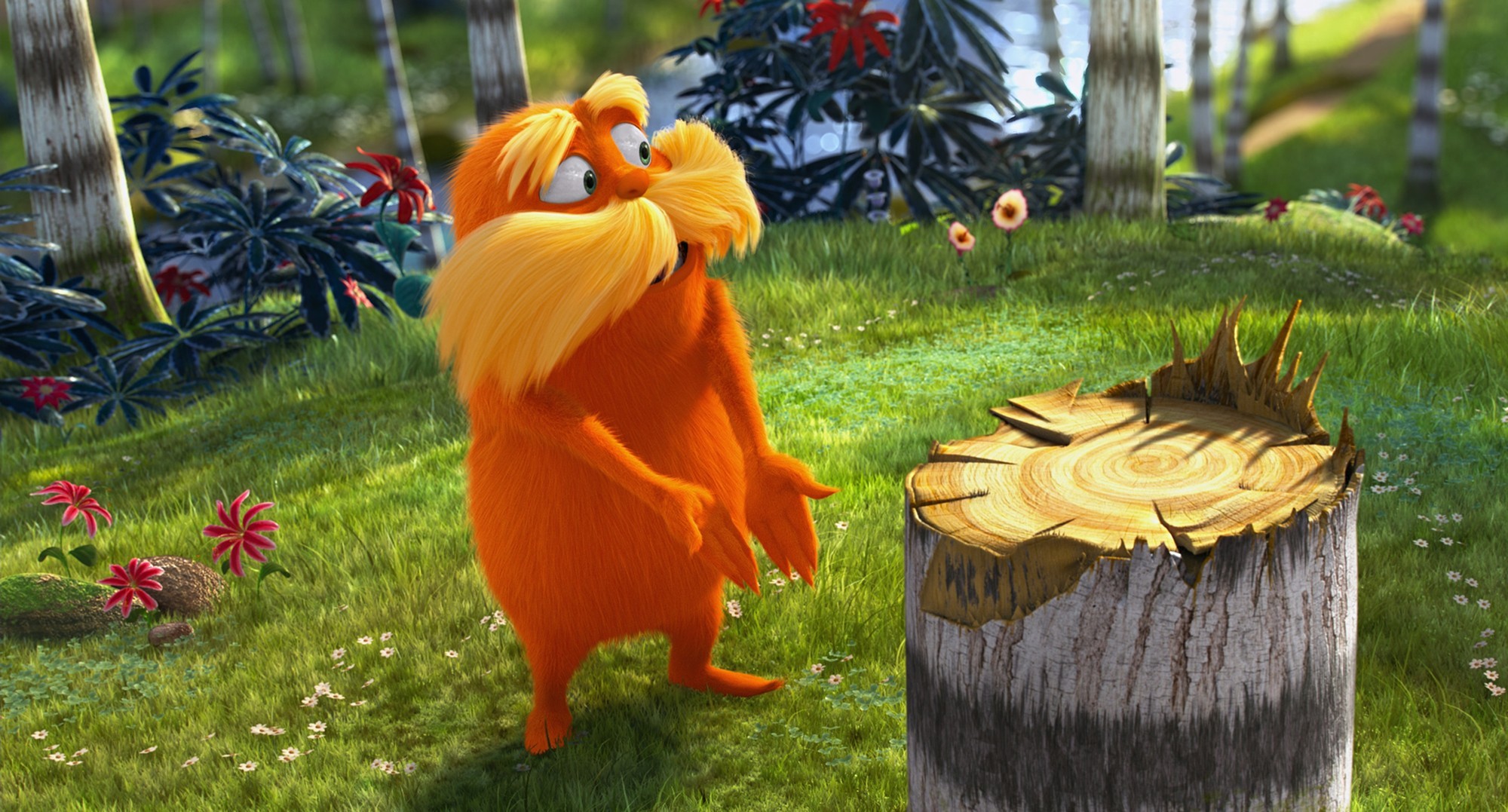
The Lorax is, by far, one of my favorite Dr. Seuss books.  The message about caring for our planet and what can happen if we do not is so prominent, especially today.  When we read about or see the devastating effects that people can have on our planet it is easy to think that there are so many who just do not care.  When you read Dr. Seuss' story, you think "unless......"

My son is too little to really understand how certain actions can hurt the planet, so we teach him the little things: watching how much water we use; growing our garden; and setting up bird feeders.  We spend time outdoors in the hopes that it will foster a love of nature and a desire to care for our planet.
~N~

Here are some ideas to celebrate Earth Day and The Lorax!
The titles link to the websites.


Botanical Gardens and Arboretums 
A great outing is to visit a botanical garden or arboretum.  The link leads you to the list of Botanical Gardens and Aboretums in the US.


Truffula Trees 

JodieFitz.com lists a recipe for creating an adorable Truffula Cake from oreo cookies.  This is a great treat for anyone who loves the Lorax!


The Educator's Spin on It provides links to 30 Lorax Crafts and Activities.


 Incredible Truffula Tree Inspired Lorax Birthday Party 


The Hostess with The Mostess blog discusses many ways to incorporate The Lorax into a party.  There are really cute ideas!


Earth Day Network provides a listing of lesson plans that can be used in connection with Earth Day.  These are arranged by grade level and connect to the Common Core Standards.
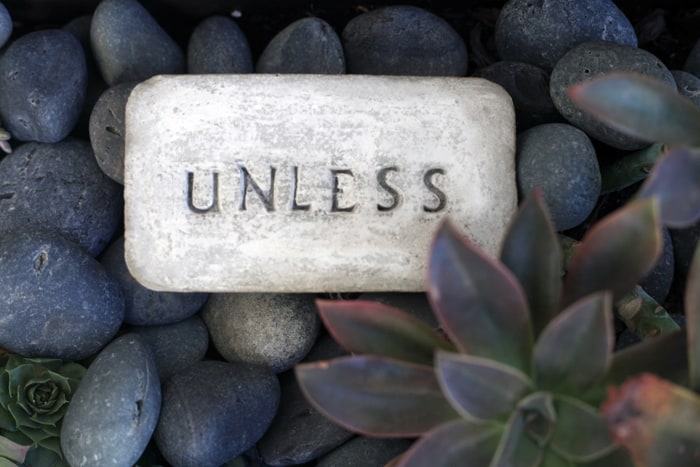


I do actually have a rock garden in my yard that is filled with stepping stones my son made.  In addition, there are stones from places we have traveled. The Prudent Baby website has a tutorial for making concrete garden stones.


 "Unless someone like you 
cares a whole awful lot, 
Nothing is going to get better. 
It's not.”
― Dr. Seuss, The Lorax

What are some of the ways you plan to celebrate Earth Day this weekend?
We would love to hear from you.
Please leave us a comment.

Wednesday, April 17, 2013

The MIdnight Ride of Paul Revere


Our thoughts and prayers are with those in Boston.
Our prayers are with all of the victims, their families, the first responders, and medical personnel.


Ironically, we had prepared this post last Saturday before the horrific events in Boston occurred on Monday.......


April 18, 1775
Paul Revere's Ride
by
Henry Wadsworth Longfellow

Listen, my children and you shall hear
of the midnight ride of 
Paul Revere,
on the eighteenth of April in Seventy-five....


There are just some poems that never leave us.  I remember clearly the beginning lines of Paul Revere's Ride.  Since I am drawn to storytelling, I have never fully gravitated to poetry.  However, I really do enjoy reading poetry that tells a story.  

There are two picture books that I think are wonderful examples of poems that tell stories.  First, Longfellow's poem is beautifully illustrated by Ted Rand in one of the books.  The other, Once Upon a Poem, is a collection of favorite poems that tell stories.  In this book, Longfellow's poem is beautifully illustrated by Carol  Lawson.   

Today is the anniversary of Paul Revere's Ride I thought it would be wonderful to highlight Longfellow's poem and the illustrated texts.  
 ~K~


Every April I make a promise to myself that I will develop better poetry lessons!  I began this year's Poetry Month with Paul Revere's Ride.  My eight graders happened to be learning about the Revolution and in literature, we were reading excerpts from Johnny Tremain so I thought the poem would be a nice supplement. And it was! 

I have come to learn that no matter what grade I teach, students love when someone reads to them.  The students were engaged as we read the poem and discussed how it compared to what they were reading in their history sources and Johnny Tremain.  It also helps that I love this historical period and was able to show my students some pictures from my visit to Boston.
~N~ 


Here are some ideas to integrate Paul Revere's Ride!
The titles link to the websites.


The Paul Revere House
This website offers the real story of Paul Revere's ride including many other resources.  Students can extend their understanding of this historical event.


The Archiving Early America website features a flash video on Paul Revere's Ride.


In this lesson plan on the ReadWriteThink website, students use MS PowerPoint to create facebook-like presentations about historical figures.


The Midnight Rider Virtual Museum
The Kids and History website offers a wonderful virtual museum.  The virtual museum has five exhibition halls that include the poem and then several extending activities for individual and small group work focusing on this historical time frame.


For, borne on the night-wind of the past,
Through all our history, through the last,
In the hour of darkness and peril and need,
The people will waken and listen to hear
The hurrying hoofbeats of that steed,
And the midnight message of Paul Revere.
Henry Wadsworth Longfellow   


Linking to:
Golden Grasses  

Saturday, April 13, 2013

The Patterns of Life


THE PATTERNS OF LIFE

This morning as I was looking out my windows onto the woodlands behind my home,  I realized the first signs of Spring are just beginning to show.  How Exciting!  Although I love the colors of Autumn, it is the Springtime that I truly enjoy.  I love seeing all of the patterns of nature unfold before my eyes.  

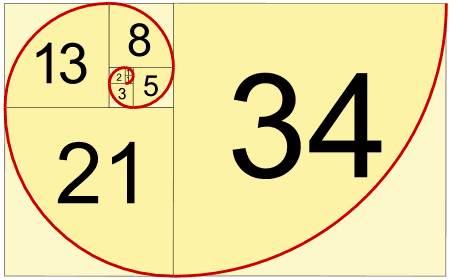
Joyce Sidman's book Swirl by Swirl Spirals in Nature  is beautifully illustrated by Caldecott medal winner Beth Krommes.  The illustrations depict wonders in nature showing the spirals in it all.   Swirl by Swirl allows readers to explore the patterns of nature.  I love taking the time to breathe deeply, think about the Golden Ratio, and enjoy all of the beauty surrounding us!
 ~K~

I have to admit the book Swirl by Swirl Sprials in Nature by Joyce Sidman was a new one for me.  However, we love looking at the natural world so right away I was drawn to it.  Beth Krommes does an amazing  job depicting whimsical and colorful variations of swirls in our world, including seashells, flowers, and snails.  I was immediately absorbed in it and intrigued by the idea of the Fibonacci pattern being presented in so many forms.  I loved how the spirals "expand" and "reach", always showing change.  My mind immediately started reeling about how I can use this book as a starting point for teaching extended metaphors!  Leave it to a literacy teacher to turn a math concept into a language arts lesson!
~N~ 

Here are some ideas to help you enjoy Swirl by Swirl!
The titles link to the websites.


You can view a trailer for Swirl by Swirl on YouTube.  It has wonderful background music that can pull in even the most reluctant readers!


The Math is Fun website gives an easy explanation of the Fibonacci Sequence.  This a great site for students to better understand the concept.


Another picture book, Blockhead: the Life of Fibonacci tells the story of the mathematician's life through his own eyesThrough the book, we learn how Fibonacci came to develop the swirling sequence.
MathFour.com  

 
Nature Walk
After reading the book, children will be so eager to find examples of the swirls on their own.  A great idea is to grab a camera and head out on a nature walk to snap some photos of real life swirls.  The children can use the book as a guide as they search. 


Extended Research
Within the Common Core Standards, research is foundational to informational writing skills.  It is helpful to introduce primary students to some of the many forms research can take.  At the Six Traits Gurus blog, you can find examples of how to incorporate research using Sidman's book.


Okay, we can go beyond nature and find delicious swirls in food as well.  This recipe is for healthy and delicious muffins.  Children of all ages will enjoy making and eating these!


An obvious, but fun activity still, would be writing shaped poetry.  Students can be given objects that are depicted in the storyThey would write a poem about that object focusing on adjectives and sensory details and then have their poem's lines form the shape of that object.
 
Extended Metaphor
My 7th grade class had just been discussing this idea so finding another way to present it to my class was on my mind.  After reading the book to my class, we discussed which characters from previous novels could be compared to a spiral - one that started "curled up" and then later began to "stretch out".  We then took the lesson a step further.  Working in groups, the students were each given a different shape and were asked to develop a metaphor that would compare another character to the shape they were given.
CCCS: Craft and Structure


scratch art pictureScratchboard Art
Krommes illustrations are Scratchboard Art.  It involves scratching away layers of color made by the artist until they blend to highlight areas of the picture.  Students could create their own Scratchboard Art.


 "A spiral ......
is a snuggling shape.
is a growing shape.
is a strong shape.
reaches out.
is clever.
is beautiful.
moves.
Spirals.....are fascinating!"
Joyce Sidman, Swirl by Swirl Sprirals in Nature 


Linking to: 
Foodie Friday 
On the Menu Monday

Sunday, April 7, 2013

Courage - The World According to Theodor Seuss Geisel Part II

 
COURAGE

THE WORLD ACCORDING TO THEODOR SEUSS GIESEL
PART II

 "A person's a person, no matter how small."
Dr. Seuss, Horton Hears a Who!

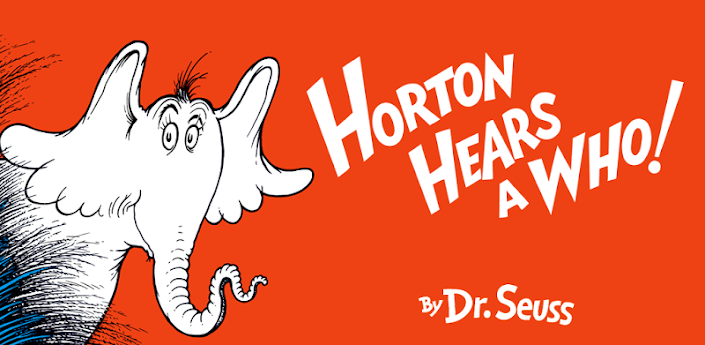
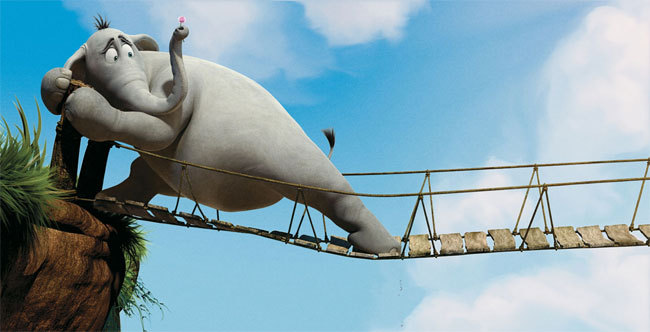
In the beloved Dr. Seuss story, Horton Hears a Who!, we learn that to be truly courageous we must do more than face our fears.  Like Horton's example, we must bravely face our fears, dangers, and oppositions, but do so wisely, at the right time, and for the right reasons. 

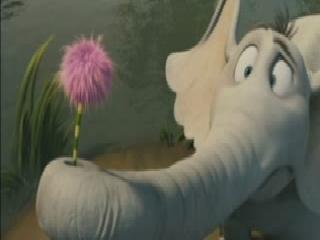
Horton displays courage when he stands up for the Whos, a civilization of tiny people living on a dust speck whom none of the other animals can hear.  
 What is this courageous wisdom?
Horton Hears a Who! is a "Just What I Need" book right now in my professional life.  I am having difficulty defending decisions that are being made at the institutional level.    I know I can learn from Horton who defended the Whos.  He knew he was doing the right thing for the Whos and for himself. Should I take this risk to defend my position or is it time to retreat?  I need to be as courageous and wise as Horton!
~K~
 So after reading Horton Hears a Who! and looking for your wise courage, perhaps you might like to try some of these fun ideas.
The titles link to the websites.

This website includes discussions questions, biography sites, vocabulary, graphic organizers, movie sites, crafts, and fun activities.


Horton's Ears
Of course, we know that Horton had the most sensitive ears and therefore could hear the tiny Whos.  This adorable and delicious recipe for Elephant's Ears from Allrecipes is fun for children to make and eat! 


Who Specks
Horton's famous line "A person is a person, no matter how small", can give children inspiration to acknowledge small acts of kindness.    Children would be happy to make the pom-poms and then award them!


Speck Lab
 I love this project because you can use it to promote so many different skills.  Children examine various pom-poms looking for "Whos" that may live there.  Young children can practice sorting with the different color pom-poms and work on fine motor skills by using tweezers.  We can introduce to students the steps of conducting a scientific experiment and the tools we use.  And of course, it is just plain FUN!
 
Adopt a Baby Elephant  Save an Elephant
Just as Horton wanted to save the "Whos", we can do the same for creatures who need our help.  The National Wildlife Federation has a program to adopt wild animals, including elephants like Horton.


 "ASAP. Whatever that means. 
It must mean, 'Act Swiftly Awesome Pacyderm!'”  
Dr. Seuss, Horton Hears a Who!


Have you ever called upon your Wise Courage?  
Please leave us a comment and tell us about it!

Linking to: On the Menu Monday